

In honor of Data Privacy Week 2026
At The District Credit Union, we believe that protecting your financial wellness goes hand-in-hand with protecting your personal information. In a world that’s increasingly digital, understanding how your data is collected, used, and shared isn’t a luxury. It’s a necessity.
That’s why we’re proud to support Data Privacy Week, an annual initiative led by the National Cybersecurity Alliance designed to raise awareness about the importance of data privacy for individuals, families, and organizations alike.
So, what does “data privacy” really mean, and what does it look like in practice? Let’s take a closer look at how your information flows through the digital world and how you can take back control.
Your Personal Information Is a Commodity. Protect It Like One

Every time you browse a website, use a mobile app, or interact on social media, you leave behind a digital footprint. From your location and shopping habits to your search history and contact lists, companies are constantly collecting and monetizing this data. Often, this happens without your explicit consent or even your awareness.
According to the National Cybersecurity Alliance, most people aren’t fully aware of just how much of their personal information is being shared. What’s more, privacy policies are often written in legal jargon that’s hard to understand, and default settings are usually configured to collect as much data as possible.
What you can do:
Take time to audit your digital life. Review the privacy settings on your favorite apps, streaming services, and online accounts. Many platforms offer options to limit data sharing, turn off tracking, or reduce the amount of personal info collected. You can use tools like the Manage Your Privacy Settings Hub to go platform-by-platform and lock down your preferences.
And if you ever think, “What’s the harm in sharing a little data?” remember this: once your information is out there, you lose control over where it goes, how it’s used, and who sees it.
The Human Side of Data Privacy: Habits Matter More Than Headlines
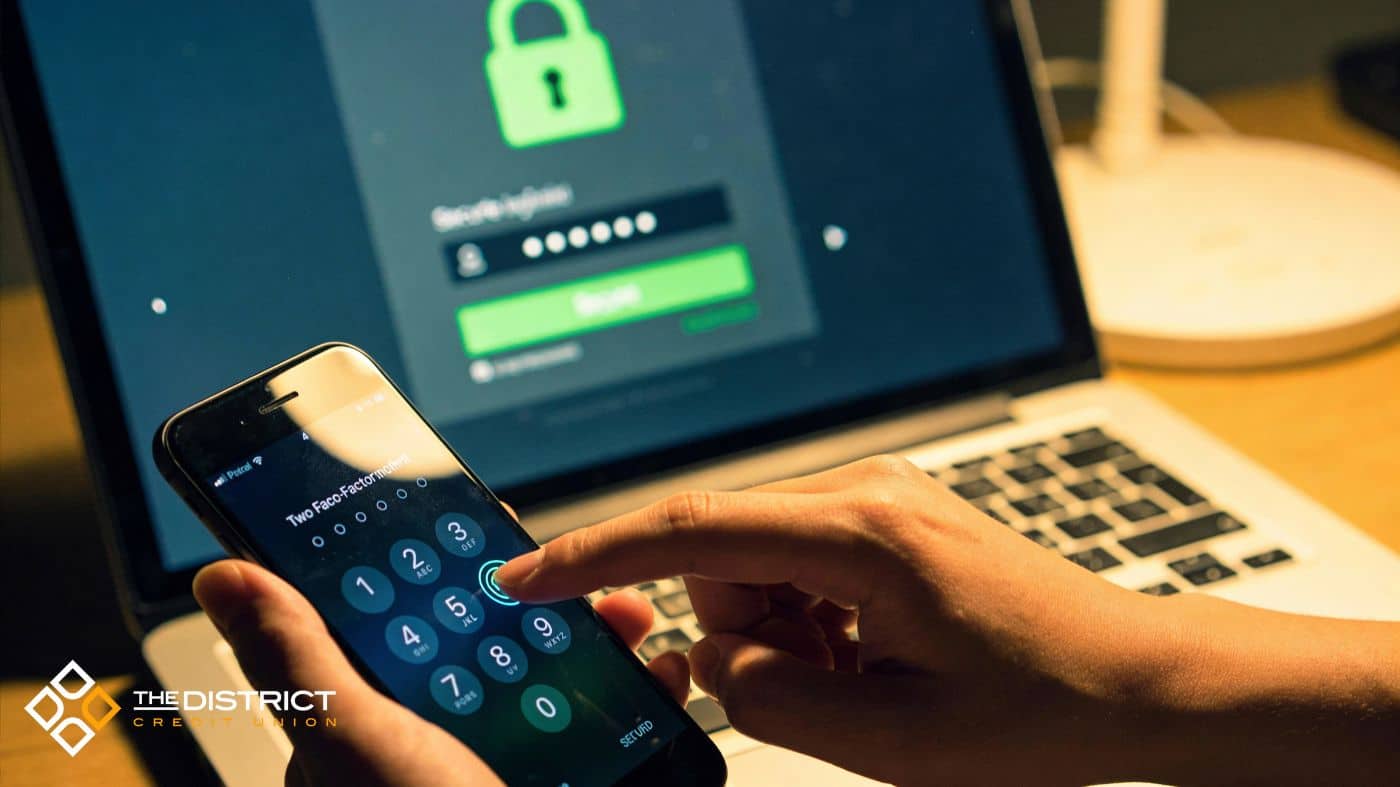
It’s easy to think of data privacy as a technical issue, something that cybersecurity experts handle with encryption and firewalls. But the reality is, your own habits are often your first (and best) line of defense.
Simple behaviors, like reusing the same password across accounts, clicking suspicious links, or skipping software updates, can open the door to hackers and identity thieves. And once they’re in, the damage can be long-lasting, especially when your financial accounts are involved.
At The District Credit Union, we’ve seen firsthand how a single compromised account can snowball into months of frustration, anxiety, and financial strain. That’s why we want to empower you to build habits that protect you and your family.
Start here:
- Use strong, unique passwords for every account. A password manager can make this easier than you think.
- Turn on multi-factor authentication (MFA) wherever it’s available. This adds an extra layer of security that can block most unauthorized access even if someone has your password.
- Keep your devices updated. Patches and software updates close security holes and protect against emerging threats.
To dive deeper into this, the National Cybersecurity Alliance offers a great guide on how to secure your accounts with MFA.
Learn to Spot the Subtle Signs of a Scam
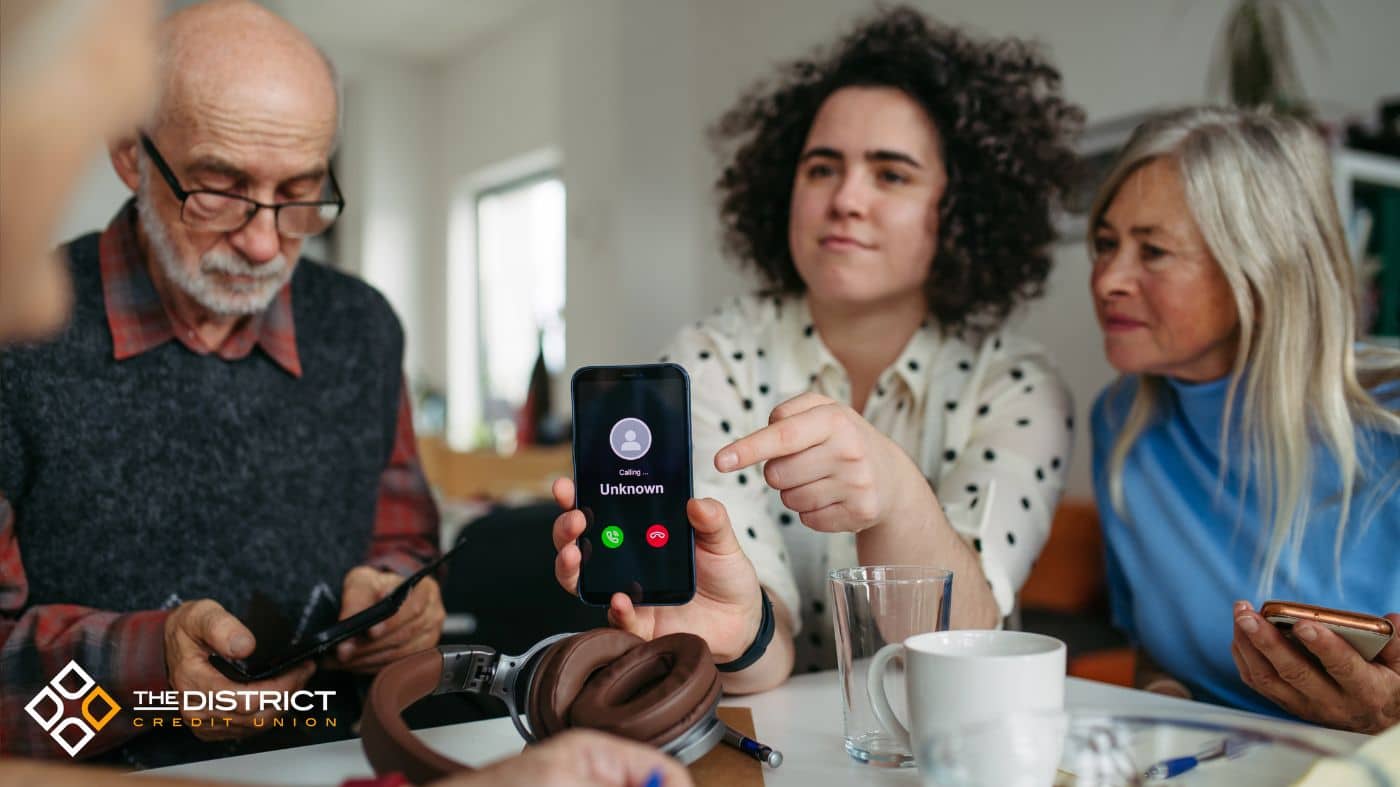
Phishing attacks, fake emails, texts, or phone calls designed to steal your info are becoming more advanced and harder to detect. Scammers often impersonate trusted brands, including banks and credit unions, to create a false sense of urgency. Their goal is to get you to hand over login credentials, credit card numbers, or personal details without thinking twice.
We’ve noticed a disturbing trend in these attacks: they now feel personal. They use your name, reference real transactions, or mimic the look and tone of legitimate institutions. And when you’re busy, distracted, or stressed, it’s easy to click before you think.
Best practices to stay safe:
- Pause and evaluate any message asking for sensitive information.
- Don’t click links or download attachments from unknown sources.
- Verify directly with the source. If something seems off, even if it looks like it’s from us, call us or log into your account from a trusted link (not the message you received).
If you ever suspect fraud or receive a suspicious message related to your District Credit Union account, we urge you to contact us immediately. Your vigilance helps protect not only your account, but also our entire member community.
Teaching Privacy Is a Family Value

Data privacy isn’t just an adult issue, it affects everyone in the household. Children and teens are increasingly active online, whether it’s for school, gaming, or social media. But younger users often don’t understand the risks of oversharing, weak passwords, or accepting friend requests from strangers.
As part of Data Privacy Week, we encourage families to talk openly about online behavior and digital boundaries. It’s never too early to start building good habits.
Tips for families:
- Create screen-time rules and talk about the types of apps or games your children can use.
- Review privacy settings together.
- Teach kids to recognize red flags, like pop-ups, online requests for personal info, or messages from unknown users.
- Remind them: once something is posted, it’s out there for good.
The National Cybersecurity Alliance has helpful family resources you can explore together.
District Credit Union’s Ongoing Commitment to Your Security

We know trust isn’t just given, it’s earned. That’s why data privacy is embedded into every part of our member experience. From the way we protect your online banking activity to how we train our staff, our goal is simple: to keep your information secure while giving you the tools to stay informed and in control.
Some of the steps we take include:
- Secure, encrypted digital banking systems
- Ongoing monitoring for suspicious activity
- Member education around fraud prevention
- Personalized support if your account is ever compromised
And we don’t stop there. We continually monitor the latest cybersecurity threats and adapt our systems to meet today’s challenges, so you can bank with confidence, knowing we’re watching your back.
Take Action This Data Privacy Week and All Year Long
Privacy isn’t a one-time setup. It’s a lifelong practice. And during Data Privacy Week, we encourage you to slow down, reflect, and make a few meaningful changes to the way you approach your digital life.
Whether it’s updating your passwords, having a family conversation about online safety, or reviewing your privacy settings, small steps can lead to big protection.
At The District Credit Union, we’re honored to be your financial partner and your partner in privacy. If you ever have questions, concerns, or just want to learn more about how to stay safe online, we’re here for you.
Let’s protect what matters most—together.