
The Branch That Disappeared
A few months ago, Maria drove to the bank branch she had used for eleven years on her lunch break from her job at an Aurora Public Schools elementary school. She needed to ask a simple question about her savings account and get help setting up a transfer for her daughter’s first semester at the Community College of Aurora. Nothing complicated. The kind of thing that used to take five minutes with someone who knew your name.
The branch was gone. A sign on the door listed a customer service phone number.
She called. Waited nineteen minutes. Got an automated menu first. Then a chatbot. Finally she was connected to someone in another state who could not see her full account history, could not confirm her transaction, and asked her to call back during “business hours”.
Maria’s story is not unusual. It is the story of millions of Americans who have watched their local financial institutions quietly disappear over the past decade.
Between 2014 and 2024, 18,839 bank branches closed across the United States, according to data published by GoWest Credit Union Association drawing on FDIC and NCUA records. The closures are accelerating, not slowing. Big banks are consolidating branches into high-income ZIP codes, routing everyone else to apps, chatbots, and call centers in other states.
During that same decade, credit unions opened 509 new branches. Not closed. Opened. That is not a small footnote. That is a fundamentally different philosophy about who banking is for.
| Is My Money Safer at a Credit Union Than a Big Bank? |
Your deposits at The District Credit Union are federally insured up to $250,000 by the NCUA (National Credit Union Administration) , the same protection level as FDIC insurance at banks. Both are backed by the full faith and credit of the U.S. government. Not one penny of insured savings has ever been lost by a member of a federally insured credit union. The difference is not the insurance level. It is who controls the institution and why. |
The Fundamental Difference: Who Are You Banking For?
A bank is a for-profit corporation. It is owned by shareholders. Its legal obligation, enforced by securities law, is to maximize returns for those shareholders. When a branch in Aurora becomes unprofitable, even if it serves thousands of families, the math says close it.
A credit union is a member-owned, not-for-profit cooperative. The District Credit Union is owned by its members. Every Aurora family, every APS employee, and every student who opens a savings account becomes a part-owner of this institution. There are no outside shareholders to satisfy. No quarterly earnings reports to Wall Street. No stock price to protect.
The only question a credit union has to answer is: are we serving our members well?
According to America’s Credit Unions, credit unions deliver more than $35 billion back to members annually through lower loan rates, higher savings returns, and reduced fees. GoWest Credit Union Association reports that Colorado credit unions now serve nearly 2.8 million Coloradans. That is not market share. That is 2.8 million people who chose an institution that puts them first.
| The Numbers That Tell the Story |
| 18,839 — Bank branches closed in the U.S. between 2014 and 2024 |
| 509 — Credit union branches opened in that same decade |
| 57% of Gen Z say branches are essential to their banking experience |
| 60% of Millennials say the same thing |
| $35 billion — Returned to credit union members annually through better rates and lower fees |
| 2.8 million — Coloradans who choose a credit union as their financial partner |
| $250,000 — NCUA federal insurance on your DCU deposits (same level as FDIC at banks) |
| Sources: GoWest Credit Union Association • America’s Credit Unions • FDIC / NCUA federal data |
NCUA vs. FDIC: What Aurora Families Need to Understand
When national news runs stories about banking instability, credit union members sometimes worry that their money is not as protected as it would be at a bank. It is a reasonable concern, and one that GoWest has had to directly address in recent months as social media narratives created confusion.
Here is the plain truth: your money at The District Credit Union is federally insured by the NCUA, which provides the same $250,000 per depositor protection as the FDIC provides at banks. Both programs are backed by the full faith and credit of the United States government. Both are independent federal agencies. The NCUA covers credit unions. The FDIC covers banks. Neither is stronger than the other.
The Colorado Division of Financial Services (DORA) is equally clear: “Not one penny of insured savings has ever been lost by a depositor/member of a federally insured savings and loan or credit union.” That is not a marketing statement. That is a regulatory fact.
The District Credit Union Is Not Standing Still
Here is something that sometimes surprises people: banking locally with a credit union does not mean accepting less. It does not mean older technology, fewer tools, or slower service. It means getting the best of both, the personal relationship and the modern platform.
The District Credit Union is investing heavily in both. Here is what that looks like.
A New Digital Banking Experience Is Coming
We hear our members. You want your banking to be fast, clear, and available wherever you are. Whether you are checking a balance between APS classes, setting up a transfer from your kitchen table at 11pm, or reviewing your account on the CU Denver campus.
The District Credit Union is rebuilding its online and mobile banking platform from the ground up. The new interface is being designed to be modern, intuitive, and genuinely user-friendly, not just a digital version of a paper form. We are building it around how our members actually live and bank in 2026, not around how banking has always been done.
We are not ready to share every detail yet, but we are ready to tell you it is coming, it is being built for you, and it is going to be worth the wait. Stay close to districtcreditunion.com for updates.
Financial Education Is Expanding in 2026 and 2027
This is where the credit union difference becomes most tangible in the Aurora community. And this is where The District Credit Union is making its biggest investment in the next two years.
We are building a significantly expanded financial education program. Not brochures. Not one-time seminars. We are talking about interactive, hands-on financial education experiences designed specifically for Aurora’s educators, students, families, and APS community.
What does that look like? Here is a glimpse of what is being built:
- Financial reality simulations for Aurora high school students
- Immersive experiences that put real financial decisions in students’ hands before they face them in real life
- Workshops designed specifically for APS staff on retirement planning, benefits navigation, and educator-specific financial strategies
- First-time homebuyer readiness programs tailored to Aurora families and the local housing market
- Digital financial literacy tools built for multilingual Aurora families, accessible from any device
- Community-based financial education events held throughout Aurora in schools, libraries and community centers
This expansion reflects our mission in action: we make our members’ lives easier to improve their financial success.
Financial education is not a separate initiative, it is central to how we support our members and strengthen the communities we serve.
| What’s Coming at The District Credit Union |
| NEW: Redesigned digital banking platform: Modern, mobile-first, built for how members actually live |
| EXPANDING 2026-2027: Financial Education Programs |
We are not going anywhere. We are growing right here in Aurora. |
| districtcreditunion.com | 303.360.0987 | 751 Chambers Road, Aurora CO |
Why Local Banking Matters More Than Ever Right Now


Colorado is under real financial pressure in 2026. CPR News reported in March 2026 that Coloradans say they are already feeling a recession before it has been officially declared. Aurora’s city operating budget has a $25 million shortfall. Grocery bills are higher. Insurance costs are climbing. Federal benefit programs that millions of Colorado families rely on (including SNAP and Medicaid) face potential cuts that could affect up to 298,000 Colorado households.
When everything around you is tightening, who you bank with matters more, not less.
When a big bank’s algorithm reviews your loan application, it processes a credit score and a debt-to-income ratio. That is the entire conversation. There is no context. No relationship. No understanding of the fact that you are an APS teacher with a stable career who just had one unexpected medical expense.
When a DCU loan officer reviews your application, they see a member, a neighbor, someone they are invested in helping succeed. That personal relationship is not a nostalgic amenity. In an uncertain economy, it is a structural advantage.
The ASSET Act: Fighting for Aurora Members at the Colorado Capitol
The credit union commitment to members does not stop at the branch door. It goes to the state legislature.
At Colorado’s Credit Union Day at the Capitol in February 2026, more than 215 Colorado credit union advocates met with nearly every state legislator to champion the ASSET Act, legislation that would give credit union professionals stronger legal tools to intervene when a member shows signs of being scammed or financially exploited. GoWest’s VP of Legislative Affairs Katie March said it plainly:
“Colorado families work hard for every dollar they earn, and they deserve to know their savings are protected from scammers and financial abusers.”
Big banks sent lobbyists. Colorado credit unions sent advocates. That is the difference.
What DCU Members Have That Big Bank Customers Do Not
A vote. As a DCU member, you are a part-owner of this institution. That is not symbolic. You have a real voice in how it operates and who it serves.
A relationship. Loan decisions made by people who know your community, not algorithms optimized for shareholder returns. When circumstances matter, they are heard.
Federal protection you can understand. NCUA-insured deposits up to $250,000. Card Nav controls that let you turn your debit card on and off. Account Security Codes that stop fraud cold. A team trained to catch problems before they reach your account.
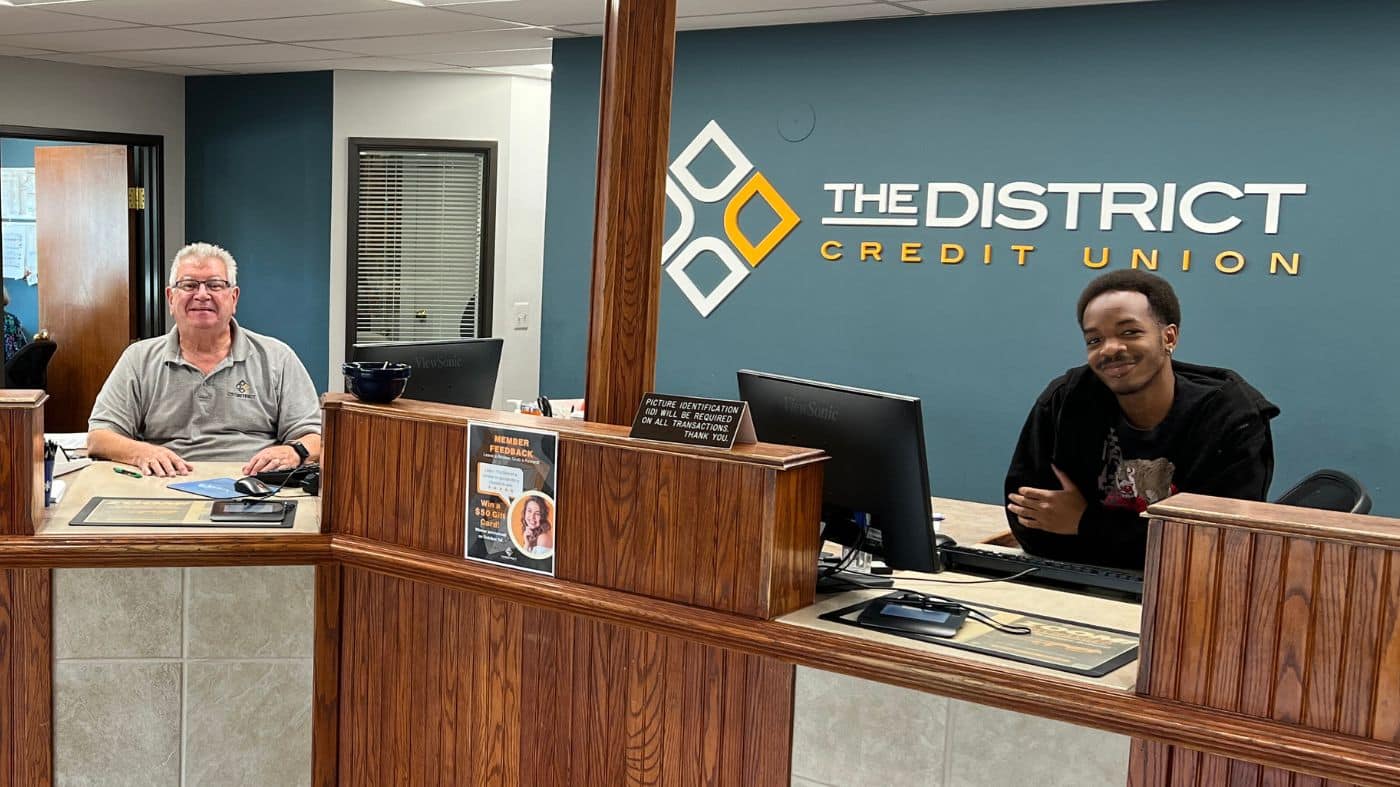
A branch that is staying. 751 Chambers Road, Aurora. Not closing. Growing.
Technology that is improving. A new digital banking platform designed around how you actually live, not how banks built apps in 2012.
Education that is built for you. Financial simulations, APS-specific workshops, homeownership programs, and free counseling, all coming in 2026 and 2027, all designed for Aurora.
A mission that never changes. Every rate, every product, every program exists to serve members, not to generate quarterly earnings for shareholders who have never been to Aurora.
The Bottom Line
Big banks are optimizing for profit. They always will be, that is what they are legally built to do. The District Credit Union is optimizing for people. That is what we are built to do.
18,839 bank branches closed in the last decade. Ours did not. 509 credit union branches opened. Ours is one of them.
Aurora is our community. It is where our members live, work, raise families, teach in classrooms, and build futures. We are not leaving. We are investing. We are upgrading. We are expanding. And we are doing all of it with one purpose: to help every member of this community thrive at every stage of their financial life.
We would love to see you at one of our branches • 303.360.0987 • districtcreditunion.com
Sources and Resources
All sources verified March 2026:
- GoWest — Credit Unions Are Safe and Sound (member deposits, NCUA insurance)
- GoWest — Colorado Credit Union Day at the Capitol, February 2026 (ASSET Act, 2.8M members)
- America’s Credit Unions — 18,839 Bank Branch Closures / 509 CU Openings, $35B returned
- America’s Credit Unions — GoWest + Colorado CUs Partner with Denver7 for Financial Education
- America’s Credit Unions — Credit Union Parity in Deposit Insurance Reform 2026
- NCUA — National Credit Union Share Insurance Fund (deposit protection)
- FDIC — Federal Deposit Insurance Overview
- Colorado DORA — Division of Financial Services: Credit Union Consumer Resources
- CPR News — Coloradans Feeling Recession Before Official Designation, March 13, 2026
- Sentinel Colorado — Aurora $25M Budget Shortfall and Furlough Plan
- The District Credit Union — districtcreditunion.com